My Phage Experience Notes
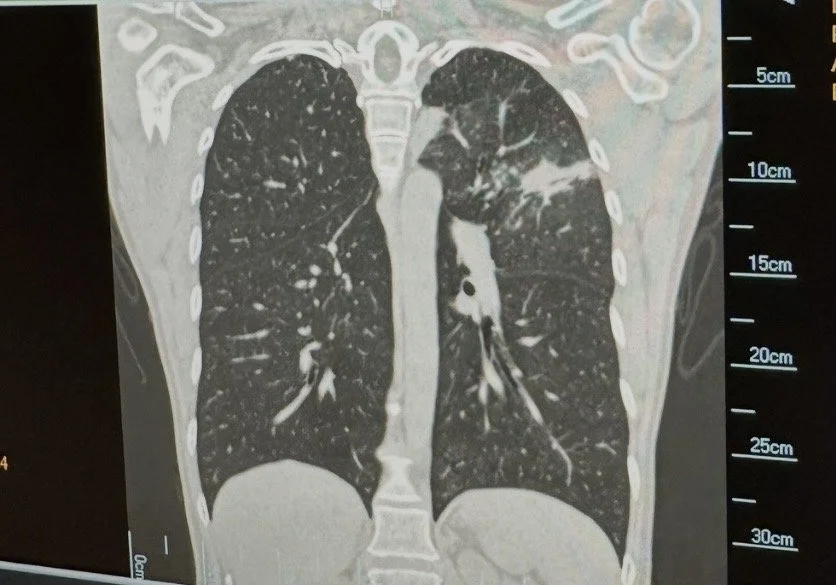
The parts of experimental medicine you don’t see in a medical journal.
Phage therapy can sound almost futuristic when you read about it.
In real life, it's much less polished.
It's IV supplies on the kitchen counter. Alarms set twelve hours apart. Doctor visits, blood draws, scans, waiting, questions - and learning an entirely new vocabulary because suddenly your life depends on understanding it.
These are my notes from inside that experience.
Some are videos. Some are photographs. Some are things I wrote down because I didn't want to forget what a particular moment felt like.
They're not intended to tell you whether phage therapy works.
They're here to show you what it's like to live through it while science is still figuring that out.
The treatment.
Three times per day. Month 5.
Infusions three times a day, every day.

Just completed month 4.

My phage infusions happen twelve hours apart.  One of the antibiotics happens mid-day, every day, timed specifically between and away from the phages. This means treatment doesn't simply fit into my schedule.

It becomes the architecture of the day. Every day.

9am:  Phages infusion.
Life and work.
1pm: Antibiotic infusion
Life and work.
9pm: Phages infusion.
Sleep.
Repeat.
Why I’m documenting this.
I started recording these moments because so much of serious illness happens where nobody sees it.
Eventually, I realized there was another reason.
Phage therapy is developing right now.
The science is changing.
The regulatory environment is changing.
Researchers are learning.
Patients are contributing information.
And I happen to be living through a small piece of that history.
So I'm documenting it.
Not because I know how this story ends.
Because I don't.
The ordinary part of something extraordinary.
Experimental medicine sounds dramatic.

Most days, it isn't.

There are syringes.

Alcohol wipes.

Saline.

Tubing.

Packages to open.

Things to refrigerate.

Bloodwork.  So much bloodwork.

Timing to remember.

And procedures that once required my full concentration eventually become muscle memory.

One of the strangest things about living through something medically unusual is how quickly the unusual can become routine.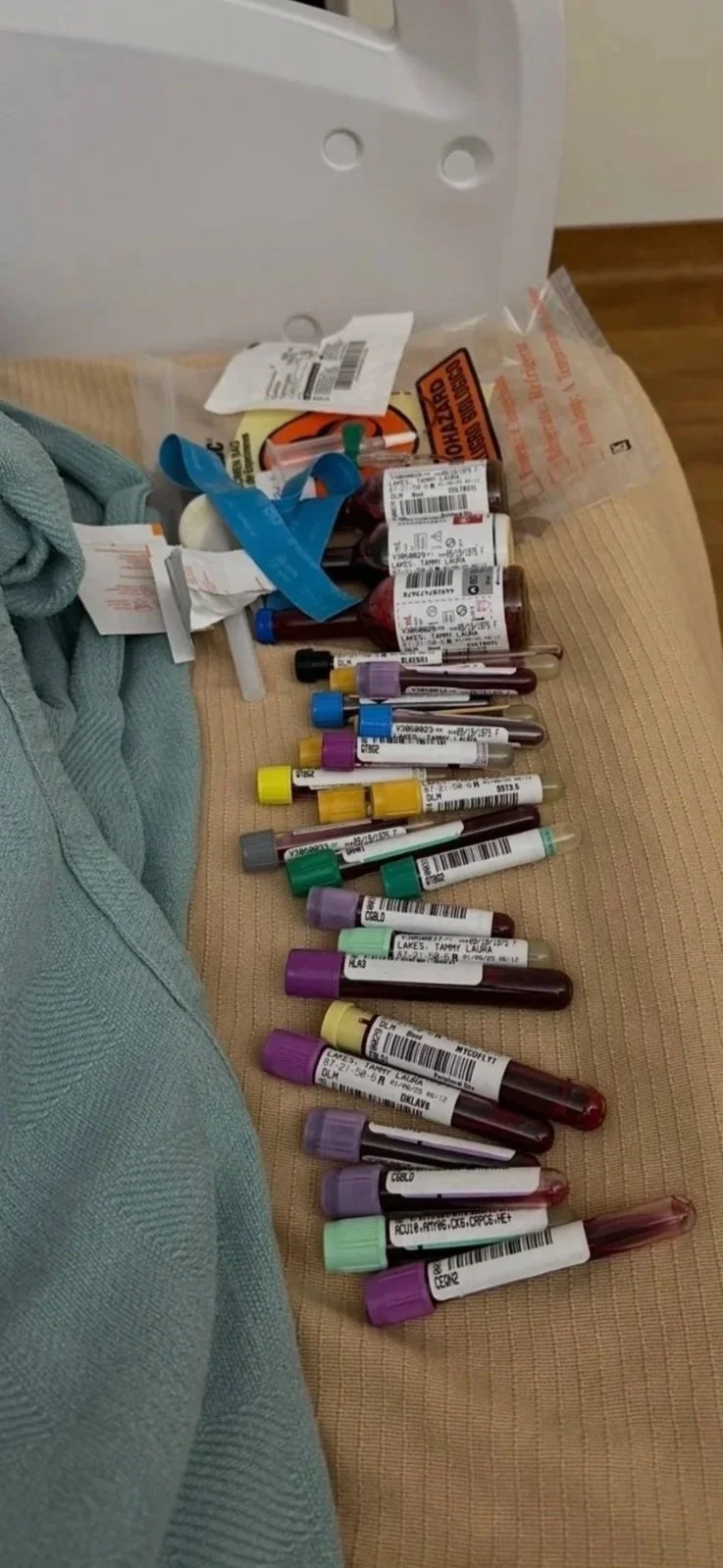
The line that became part of my body.
There are parts of treatment that nobody can really prepare you for.

A central line is one of them.

It makes treatment possible.

It also comes with you everywhere, making small tasks more challenging, changing life.

Showering changes.

Getting dressed changes.

Sleeping changes.

Travel changes.

Something is attached to your body in a way that's difficult to explain...until you've lived with one.

Eventually, even that becomes normal.

Or at least your definition of normal changes.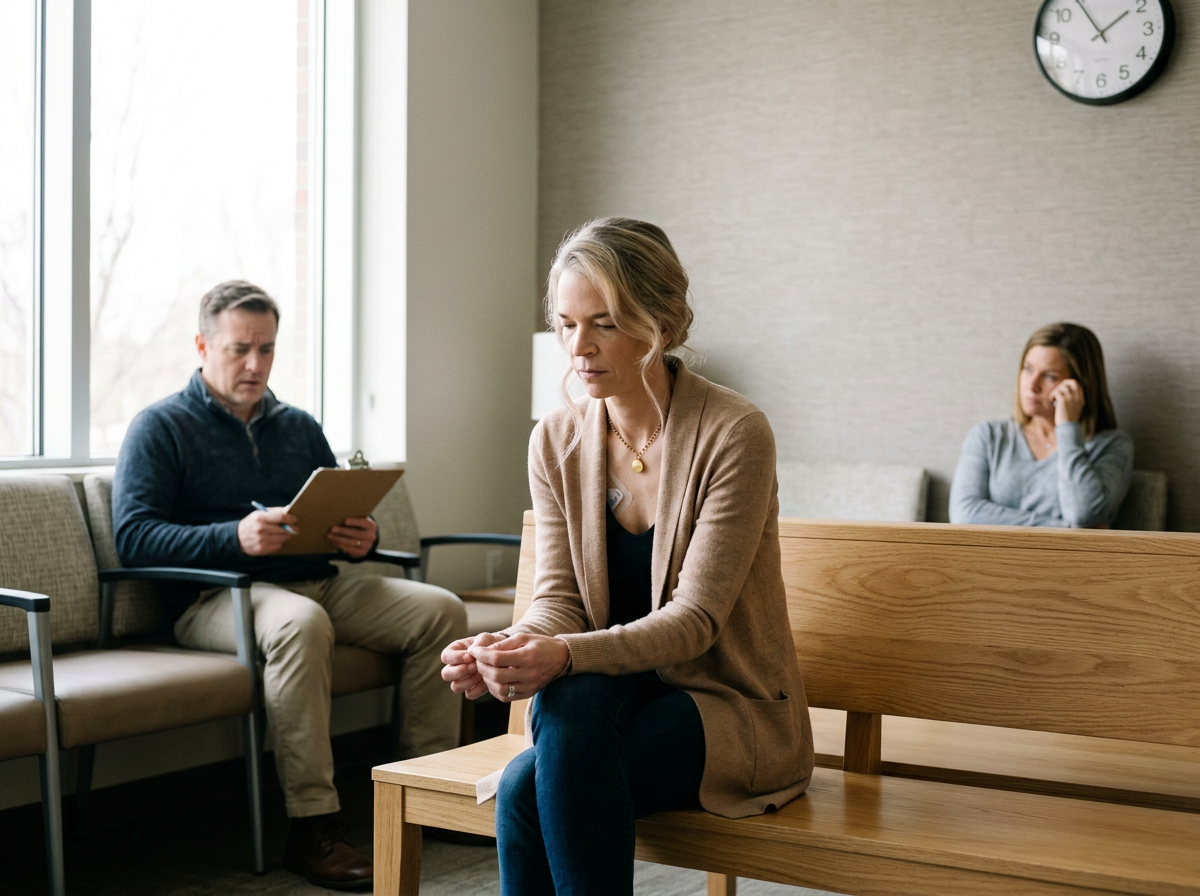
Waiting.
There is a lot of waiting in medicine.
Waiting for appointments.
Waiting for cultures.
Waiting for laboratory results.
Waiting for medicines to arrive.
Waiting for scans.
Waiting for someone to call.
Waiting to find out whether months of treatment have changed anything happening inside your body.
The treatment itself becomes routine.
Sometimes the waiting feels much more difficult.
What does “better” look like?
This is one of the questions I've had to learn to ask differently.
With a complicated infection, progress doesn't necessarily arrive as:
You're cured.
Sometimes it arrives as a radiologist describing something as smaller.
A scan that looks a little better than the last one.
A symptom that's less intense.
A laboratory result moving in the right direction.
Something stabilizing instead of worsening.
Tiny changes can carry enormous emotional weight when you've spent years watching for them.
The people behind each dose.
When I pick up a syringe, I see treatment.
But behind what's inside it is an entire chain of people and decisions most patients never see.
Researchers.
Microbiologists.
Physicians.
Phage scientists.
Laboratories.
Pharmacists.
Regulatory teams.
People coordinating across institutions.
People answering emails.
People solving problems I may never even know occurred.
One small dose can represent an extraordinary amount of human effort.
That's something I never want to forget.
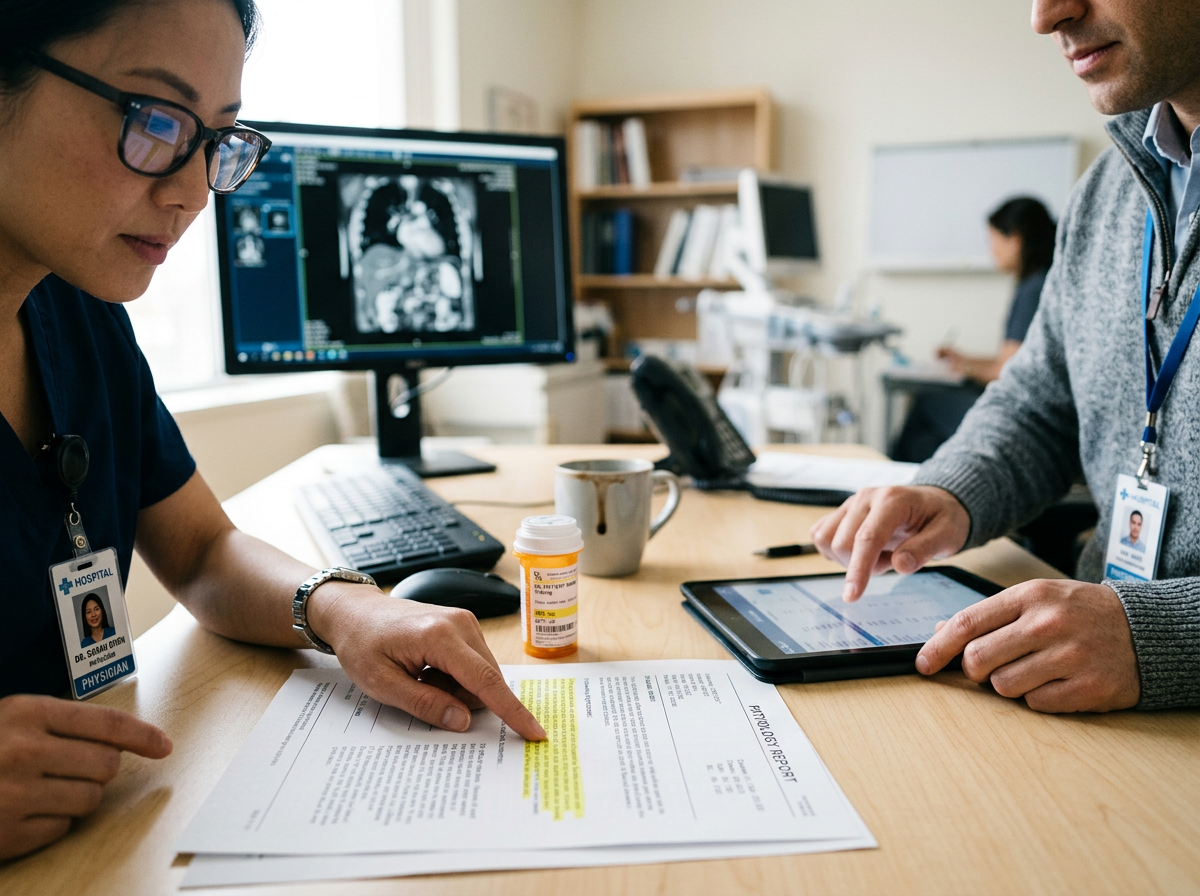
The question everyone asks.
Is it working?
It's the obvious question.
It's also one of the hardest to answer.
Treatment doesn't happen in isolation.
There are medications.
There is the immune system.
There are changes over time.
There are scans and laboratory findings and symptoms that don't always move together.
So I try to resist turning every good day into proof and every bad day into failure.
The answer has to come from evidence collected over time.
But I'm human.
Of course I look for signs.
The things a medical chart doesn’t tell you.
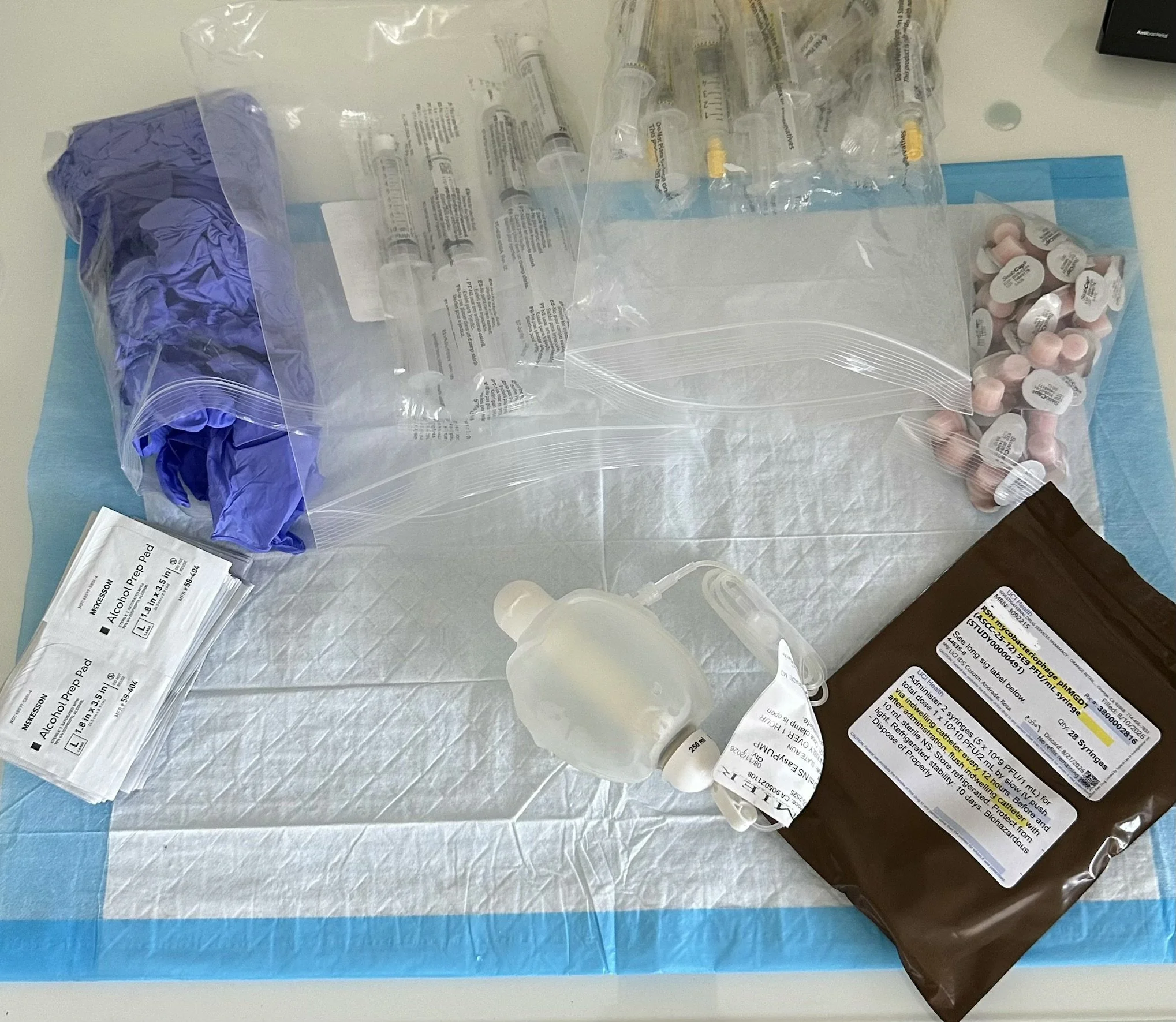
My chart can tell you which drugs I've taken.
It can tell you when I had surgery.
It can show you laboratory values and CT scans.
It cannot tell you what it takes to get through an ordinary Tuesday.
It doesn't record the calculations before deciding whether I have enough energy to go somewhere.
It doesn't show the supplies packed before leaving home.
It doesn't capture the moments when something I used to do without thinking suddenly requires planning.
That's part of illness too.
And it's part of this story.
Life between the doses.
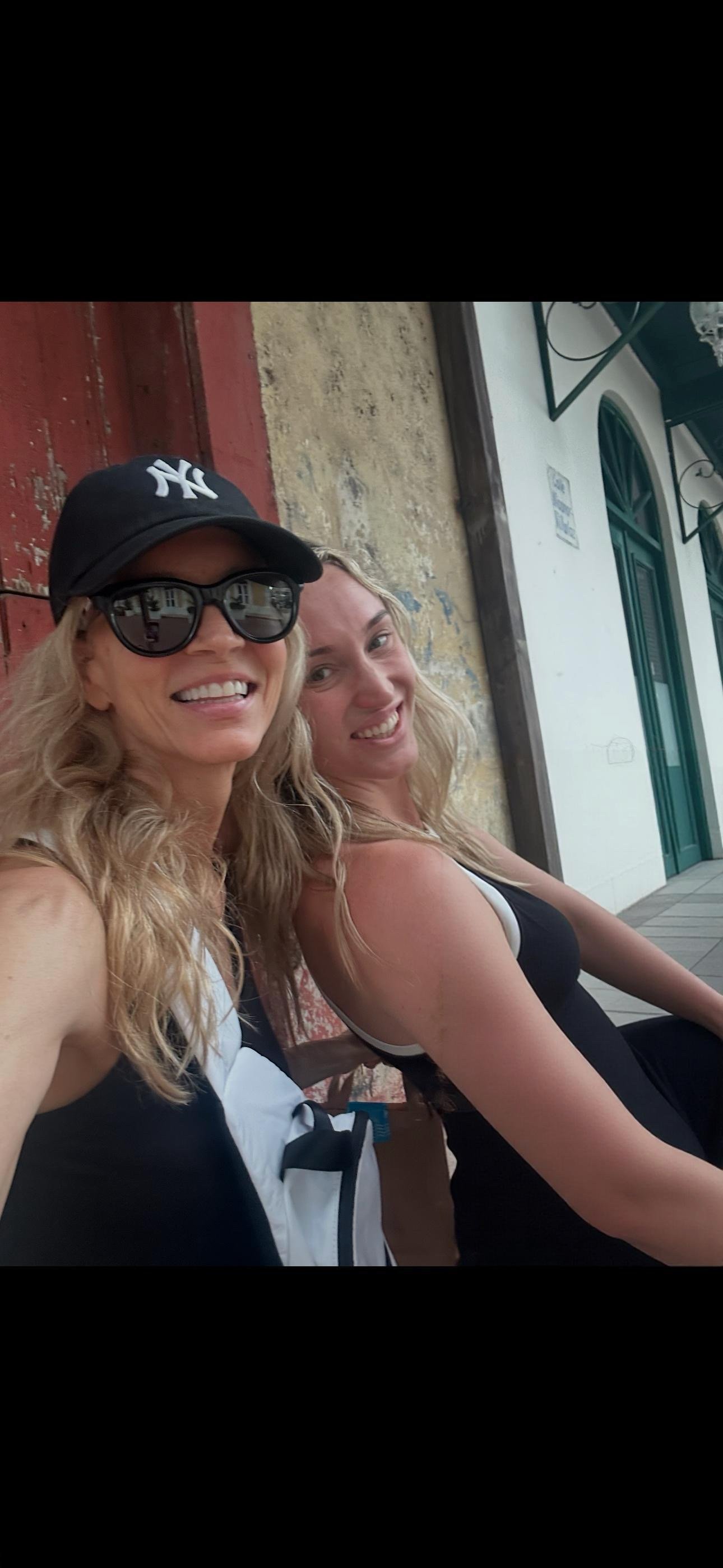
I don't want this journal to become a collection of medical procedures.
Because I'm not spending my life simply waiting to get better.
I'm still working.
Still building things.
Still spending time with the people I love.
Still laughing.
Still planning.
Still trying new things.
Treatment occupies a significant part of my life.
It doesn't get to become all of it.
Somewhere along the way, I became a translator.
I learned phage science because I had to.
Over time, conversations with physicians, microbiologists and researchers gave me an unusual view from both sides: the science - and what that science means when you're the patient waiting for it to work.
My role isn't to simplify the science until it's inaccurate. It's to help make it understandable enough that people realize why it matters.
That's become part of my purpose here: helping translate what's happening at the frontier of phage therapy into something the rest of us can understand.
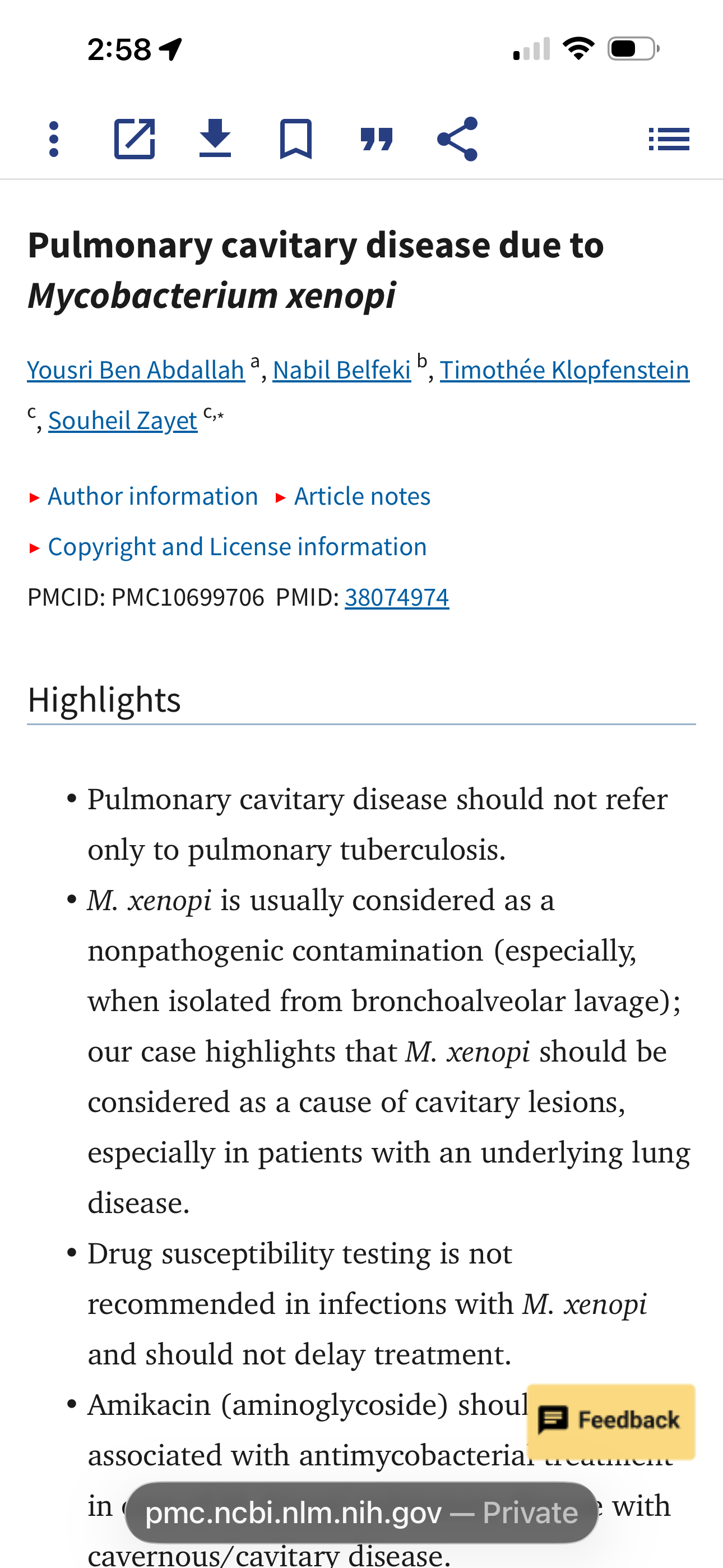
Behind the Doors Most Patients Never See
One unexpected part of this journey has been gaining access to places - and people - I never would have encountered otherwise.
Research settings. Scientists and physicians working at the edge of what we know. Conversations about treatments while they're still being figured out.
As a patient, I've had the unusual experience of seeing parts of medicine that normally happen far from the people whose lives depend on them.
This video is one small glimpse into that world.