What if nature has already given us another way to fight bacteria?
For more than a century, medicine has relied heavily on antibiotics to fight bacterial infections.
But antibiotics aren't the only things capable of killing bacteria.
There is another predator.
And it has been here all along.
A virus.
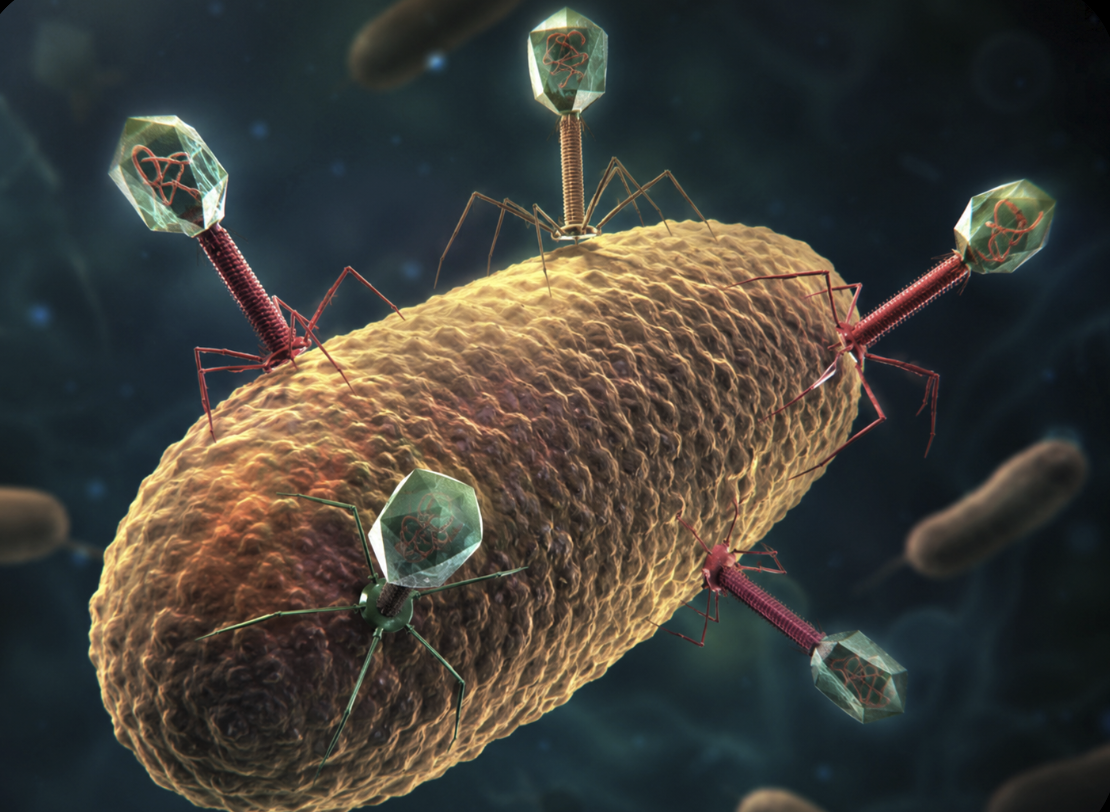
Meet the bacteriophage.
Meet the bacteriophage.
They’re already all around us.
In the ocean.
In rivers.
In soil.
On plants.
Inside our bodies.
Anywhere bacteria exist, bacteriophages - or phages - are likely to be found.
They are viruses that infect bacteria rather than human cells.
And they are extraordinarily abundant.
Scientists estimate there may be roughly 10³¹ phage particles on Earth, making phages among the most abundant biological entities known.
Yet most of us have never heard of them.
A microscopic predator
A bacteriophage cannot simply attack anything it encounters.
It needs the right bacterial host.
Think of it less like a bomb...
and more like a key searching for the right lock.
A phage recognizes receptors on a bacterium, attaches to the cell and delivers its genetic material inside.
With lytic phages, the kind particularly relevant to phage therapy, something remarkable happens.
The phage uses the bacterium's own machinery to make more phages.
Eventually, the bacterial cell ruptures.
The newly produced phages are released.
And they can search for more susceptible bacteria.
The predator multiplies where its prey exists.
How a phage attacks a bacterium.
1. FIND
The phage encounters a bacterium it can recognize.
↓
2. ATTACH
Structures on the phage interact with receptors on the bacterial surface.
↓
3. ENTER
The phage delivers its genetic material into the bacterial cell.
↓
4. REPLICATE
The bacterium becomes the machinery for producing new phages.
↓
5. BURST
With a lytic phage, the bacterial cell ultimately breaks open, releasing new phages.
This is where things get really interesting.
Phages can be highly specific about the bacteria they infect.
Some may target particular bacterial species - or even particular strains.
That specificity creates an intriguing possibility.
Instead of asking:
What drug kills bacteria?
Researchers may sometimes be able to ask:
What phage kills this bacterium?
And that begins to look a lot like precision medicine.
NOT JUST THE DISEASE.
THE BACTERIUM.
THE PATIENT.
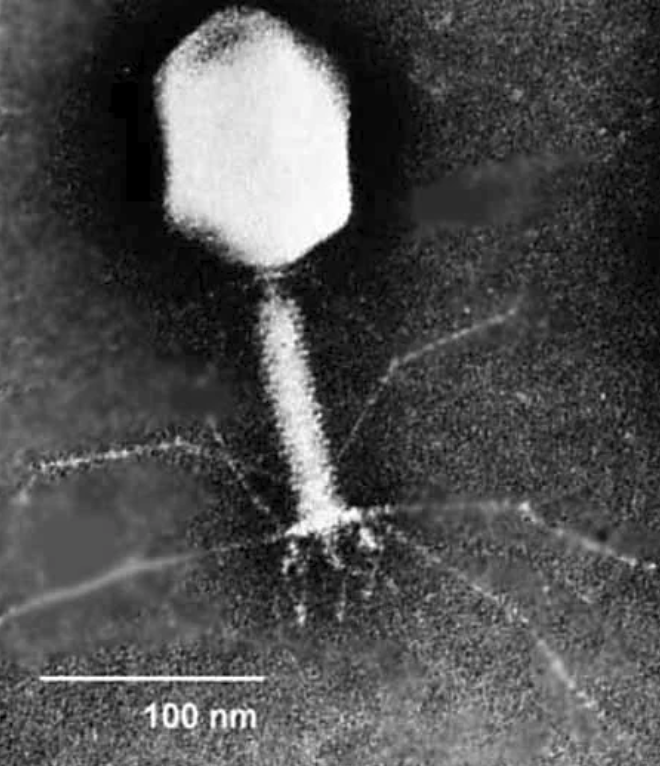
Personalized Phage Therapy
Imagine that a bacterial sample is taken from a patient.
Researchers isolate the bacterium.
Then they begin looking for phages capable of infecting it.
Potential phages can be tested against the patient's bacterial isolate.
Researchers may identify promising candidates and, depending on the treatment and research program, phages may undergo further characterization, preparation and testing before they can potentially be used.
Sometimes more than one phage is combined into what is called a phage cocktail.
It is a very different way of thinking about infection.
The treatment may be selected not simply because of the name of the disease...
but because of the particular bacteria living inside one particular patient.
But phage therapy isn’t new.
Here's one of the strangest parts of this story.
Scientists began studying bacteriophages more than 100 years ago.
Phage therapy was explored before antibiotics transformed medicine and continued to be used and researched in parts of Eastern Europe and the former Soviet Union even as antibiotics came to dominate Western medicine.
Then antibiotics changed everything.
They were comparatively straightforward to manufacture.
Easy to prescribe.
Often extraordinarily effective.
And for decades, they helped push phage therapy to the edges of Western medicine.
But bacteria kept evolving.
Antibiotic resistance grew.
And an old scientific idea suddenly became relevant again.
Phages didn’t come back. Our need for them did.
Why scientists are looking again
-
Researchers are investigating phage therapy because it offers characteristics fundamentally different from conventional antibiotics.
-
Many phages have relatively narrow bacterial host ranges, potentially allowing them to target specific bacteria while leaving other non-target organisms untouched.
-
That makes them especially interesting when bacteria have developed resistance to conventional drugs - and gives researchers another way to approach infections that have become difficult to treat.
-
Some phages and phage-derived enzymes are being investigated for their potential to interact with or disrupt bacterial biofilms - protective communities that can make some infections particularly difficult to treat.
-
Phages and bacteria exist in an evolutionary relationship. Scientists are studying how that relationship might be harnessed therapeutically - and how phages might complement, rather than simply replace, antibiotics.
And that last point matters.
This is not necessarily:
Phages or antibiotics.
The future may sometimes be:
Phages and antibiotics.
Researchers are studying how phages could potentially work alongside existing treatments.
The goal isn't to discard one of medicine's greatest inventions.
It's to give medicine more tools.
So why isn’t everyone getting phage therapy?
Because this science is promising.
But it is also complicated.
Phage therapy remains investigational in the United States, and researchers are still working to answer important questions about safety, effectiveness, dosing, delivery, resistance, immune responses, manufacturing and which patients and infections are most likely to benefit. NIH has highlighted encouraging patient experiences while emphasizing that more research is needed.
And phage specificity, the characteristic that makes the approach so fascinating, can also make treatment more difficult.
You need the right phage.
For the right bacterium.
Prepared appropriately.
Delivered appropriately.
To the right patient.
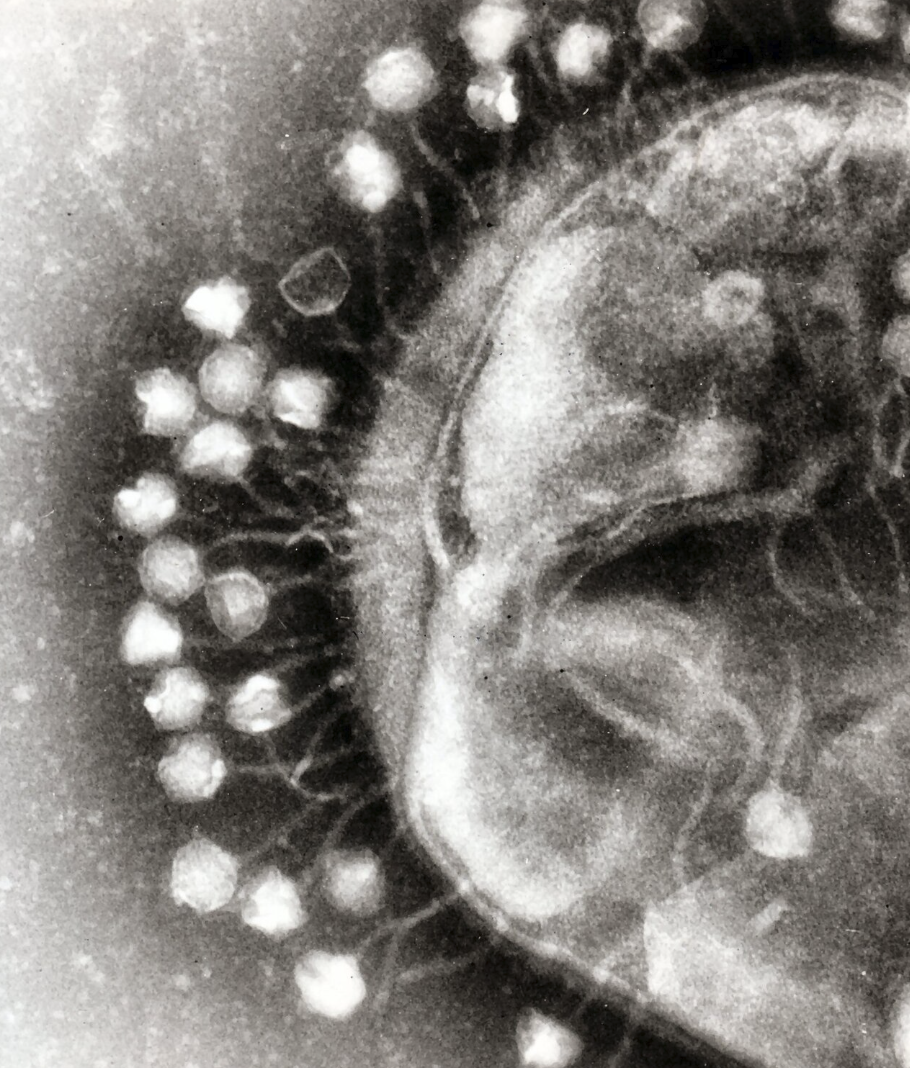
Sometimes the search itself takes longer than the treatment.
A patient's bacterial isolate may need to be obtained.
Phages need to be identified.
They need to demonstrate activity against that isolate.
Potential candidates need to be evaluated.
A treatment strategy needs to be developed.
And because phage therapy is investigational in the United States, patients receiving it outside a clinical trial may need to do so through an FDA pathway such as Expanded Access (Compassionate Use).
This is not ordering a prescription from the pharmacy.
It can require coordination among physicians, researchers, laboratories, institutions, regulators - and a patient who may already be very sick.
FDA Expanded Access
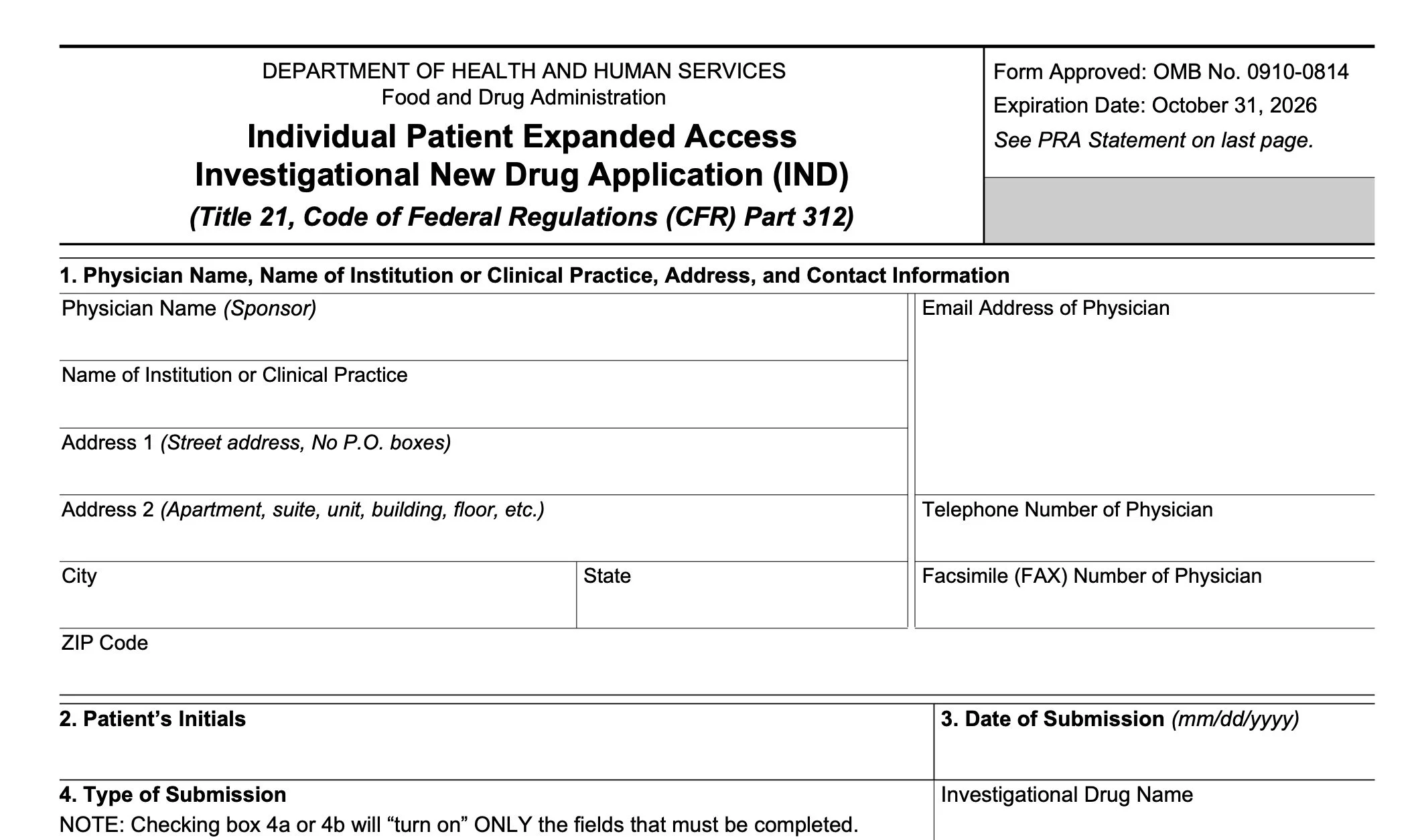
Sometimes called compassionate use, Expanded Access is an FDA pathway that can allow a patient with a serious or immediately life-threatening condition to receive an investigational medical product outside a clinical trial when comparable or satisfactory treatment alternatives aren't available.
It doesn't mean the treatment has been proven to work.
It doesn't mean the FDA has approved the treatment as safe and effective for that particular use.
It means there is a regulated pathway through which an investigational treatment may sometimes be considered when the circumstances justify it.
The questions that still need to be answered.
We don't know everything yet.
How should phages be dosed?
What's the best way to deliver them for different infections?
When should they be combined with antibiotics?
How does the immune system affect them?
How frequently will bacteria develop phage resistance?
How should personalized phages be manufactured quickly and consistently?
Which infections are most likely to respond?
How do we turn extraordinary individual cases into reproducible medicine for millions of people?
Those questions aren't reasons to dismiss phage therapy.
They're reasons to study it.
And yet…
Every established medical treatment was investigational once.
Every accepted therapy began with a question.
Every clinical trial exists because someone believed there was enough evidence to ask:
Could this work?
That is where phage therapy stands today.
Not science fiction.
Not a miracle.
Not yet routine medicine.
But a serious scientific field being explored at a moment when humanity urgently needs new ways to fight bacterial infection.